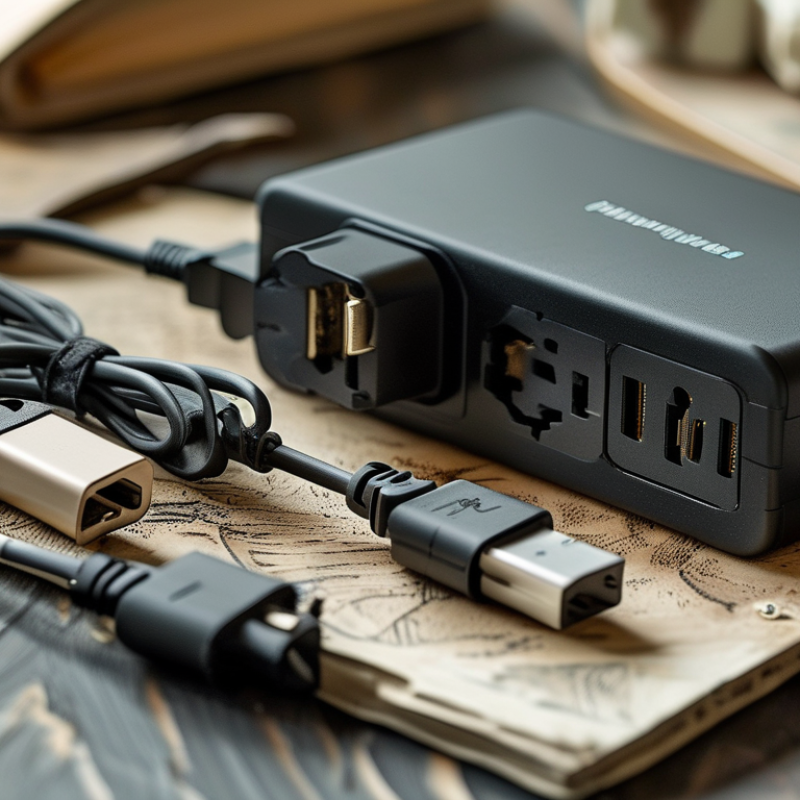
Top Universal Travel Power Adapter for Global Buyers

Time:2026-09-10 Author:Ethan
0%

Choosing the Top Universal Travel Power Adapter for Global Buyers begins with a simple question: what will you plug in?

A phone charger, laptop, camera battery, and hotel-room shaver can demand different levels of protection. A reliable Universal Travel Power Adapter should fit common socket types without feeling loose. It should also provide stable USB-C Power Delivery, clear voltage information, and a replaceable fuse where appropriate. “A plug adapter does not change voltage,” safety expert John Drengenberg has warned. That distinction matters. A traveler from the United States may need voltage conversion for a device used in parts of Europe, Asia, or Africa. Many modern chargers accept 100–240V, but not every appliance does.

Small details reveal product quality. Look for shutters, grounded connections, heat-resistant housing, and visible certification marks from recognized safety bodies. A firm switch is reassuring. A burning-plastic smell is not. Never ignore it. The best design remains compact enough for a crowded carry-on, yet strong enough for repeated hotel use. It should not block the neighboring outlet or collapse under a heavy laptop charger.

Still, no adapter solves every problem. That assumption is easy. It is also wrong. Plug shape, voltage, frequency, wattage, and local safety standards must be checked together. Some products advertise “worldwide” coverage while supporting only selected regions. Others include many ports but offer weak charging performance. This guide examines those gaps carefully, comparing practical protection, travel convenience, charging speed, and long-term reliability for global buyers. Mistakes can happen, especially when labels are unclear. Careful checking remains the safest feature.

Top Universal Travel Power Adapter for Global Buyers

What Makes a Universal Travel Power Adapter Suitable for Global Buyers

Top Universal Travel Power Adapter for Global Buyers

What Makes a Universal Travel Power Adapter Suitable for Global Buyers

A suitable universal travel power adapter must fit more than one wall socket. It should support common plug types used across Europe, Asia, North America, and Australia. A compact sliding mechanism can reduce the need for separate attachments. However, loose parts may break inside a crowded suitcase. That small risk deserves attention.

Electrical compatibility matters even more. An adapter changes the plug shape, not the voltage. Travelers should check whether their device accepts the local voltage range. A hair dryer may require a proper converter, while many phone chargers accept 100–240V. Clear voltage markings help prevent expensive mistakes. In practice, this detail is often missed.

Safety features show real product quality. Look for insulated pins, child-safe shutters, overload protection, and a secure housing. A built-in fuse can provide another layer of protection, but it is not a guarantee. The adapter should also carry recognized safety certification for its intended markets.

USB-C charging is useful, especially with power delivery support and independent port protection. Still, more ports can create heat when several devices charge together.

I once underestimated that issue in an older hotel room. The adapter felt warm, although it remained functional. Ventilation and moderate use would have been wiser.

A reliable model should feel stable in the socket, remain cool during normal charging, and include honest instructions for different countries.

How Plug Types, Voltage, and Frequency Affect International Use

Top Universal Travel Power Adapter for Global Buyers

International use begins with three details: plug shape, voltage, and frequency. The International Electrotechnical Commission’s World Plugs database identifies 15 commonly used plug types worldwide. A universal adapter can bridge physical shapes, but it usually cannot change electricity. That distinction matters.

I once assumed a matching plug meant safe operation. That assumption was wrong. A device marked “100–240V, 50/60Hz” normally supports many destinations without a voltage converter. Devices labeled for one voltage may need a certified converter instead. Hair dryers, heated tools, and other high-wattage products deserve extra caution. Check their wattage before packing. Small errors can become expensive.

Frequency also affects performance. Many modern chargers tolerate both 50Hz and 60Hz, according to common manufacturer specifications and international electrical standards. Motors, analog clocks, and some heating equipment may behave differently. An adapter does not correct frequency. It only changes socket compatibility. The IEC’s low-voltage equipment framework also emphasizes insulation, grounding, and protection against electric shock. Look for a secure earth connection when using three-pin equipment.

Demand for reliable travel power is growing. UN Tourism reported about 1.4 billion international tourist arrivals in 2024 in its January 2025 World Tourism Barometer. That scale increases the value of careful preparation. A universal adapter with shutters, overload protection, and clear ratings is more practical than a cheap, loose-fitting model. Still, “universal” is not the same as universally suitable. Check the destination, device label, and local socket before departure.

Key Safety and Compatibility Features to Evaluate Before Buying

International travel is expanding again. UN Tourism’s January 2025 Barometer recorded about 1.4 billion international tourist arrivals in 2024. IATA also forecasts passenger demand to keep rising. More travelers mean more crowded sockets, unfamiliar voltage systems, and rushed charging decisions.

Check voltage before plug shape. A universal adapter changes the outlet connection, but usually does not convert voltage. Confirm that your device accepts 100–240V input. Hair dryers and heating tools often require much higher wattage. Choose an adapter with overload, overheat, and short-circuit protection. A replaceable fuse adds another safety layer. Internal shutters can also help prevent accidental contact with live parts.

Grounding matters. Travelers using metal-cased laptops should avoid adapters that provide only two-pin connections. Look for a secure earth path and clearly marked current limits. USB-C output should state its power delivery rating, not merely “fast charge.” Underpowered ports may charge slowly or heat during continuous use. Certification information should be printed clearly on the housing, with no vague safety claims. National electrical authorities repeatedly warn that counterfeit or poorly marked adapters can create fire and shock risks.

I have learned not to trust a universal label alone. It sounds convenient. Read the manual. Inspect loose pins, cracked plastic, and unusual heat after ten minutes. A compact design is useful, but tiny vents can restrict cooling. Compatibility is not perfect, especially with older grounded equipment. That detail is easy to miss. Check the destination’s socket standard and your device’s voltage rating before packing.

Top Universal Travel Power Adapter for Global Buyers

Key Safety and Compatibility Features to Evaluate Before Buying

How to read this chart: Travel destinations use different nominal mains voltages. A universal adapter changes the plug shape but normally does not convert voltage. Before buying, confirm that the adapter or connected charger supports the destination voltage, preferably with a wide input range such as 100–240 V, and look for grounded protection, overload protection, certified safety testing, shuttered sockets, and a clearly stated maximum current rating.

Values shown are common nominal household voltages. Local variations and exceptions may exist, so verify the destination’s electrical standard before travel.

Comparing Adapter Designs, Charging Ports, and Travel Convenience

Top Universal Travel Power Adapter for Global Buyers

A universal travel adapter should match real charging habits, not just country lists. IATA’s 2024 passenger forecast estimated 4.96 billion air travelers worldwide. That scale makes compact, reliable charging increasingly important. Slide-out plugs usually save space, while fixed-prong designs can feel sturdier in crowded hotel sockets. The best housing also includes shutters and firm strain relief. A loose adapter becomes frustrating beside a bed.

Charging ports deserve closer attention. USB-C should be the main port for phones, tablets, and newer laptops. USB-IF guidance supports USB Power Delivery for negotiated charging, but wattage still varies between products. Look for at least 30W for tablets and 65W for many lightweight laptops. USB-A remains useful for older cables, although it may charge more slowly. One port is rarely enough. Three or four ports reduce the need for a power strip, but shared output can lower speed. I have learned this the inconvenient way.

Tips: Check total output, not only the highest single-port figure. Confirm plug compatibility for every destination. Avoid covering the adapter with clothing. Test your cables before departure. Small details matter.

Travel buyers should also compare weight, fuse protection, and socket grip. A compact body may hide limited spacing between ports. That design looks elegant, yet large charging plugs can block neighbors. IATA’s 2024 Global Passenger Survey also highlights growing expectations for smoother travel experiences. A dependable adapter supports that experience, but it cannot fix poor cable quality or unsafe sockets. My own preference is practical rather than perfect: moderate size, clear specifications, and enough ports for one nightstand.

How to Select the Right Universal Travel Adapter for Your Destinations

Choosing a universal travel adapter starts with your destination, not its appearance. IATA reported 4.7 billion air travelers worldwide in 2024, so “global” travel often means several socket systems in one year. Check each country’s plug type before departure. Type G sockets need three rectangular pins, while Type C and Type F use round pins. Japan and parts of North America commonly use Type A and B. A small mismatch can leave your phone charging beside the bed.

Voltage matters more than convenience. An adapter changes the plug shape, but usually does not convert voltage. Confirm that your devices accept 100–240V, especially hair dryers, shavers, and heated styling tools. The IEC 60884-1 standard sets safety requirements for household plugs and socket outlets, but certification markings still need careful checking. Look for appropriate fuses, insulation, grounded connections, and clear input ratings. USB-C ports are useful, yet wattage can vary. A laptop may charge slowly through a low-output port.

I test adapters at home with a phone, laptop, and compact charger. That simple check exposes loose sockets and awkward cable positions. I once trusted a slim adapter too quickly; it blocked the neighboring outlet. That mistake still feels avoidable. Choose a unit with destination-specific compatibility, stable grip, and enough power for your actual devices, not every device you might someday carry.

Top Universal Travel Power Adapter for Global Buyers - How to Select the Right Universal Travel Adapter for Your Destinations

Destination Group Common Socket Type Typical Supply Voltage Typical Frequency Adapter Requirement Recommended Features Important Safety Note
United States, Canada, Mexico Type A and Type B 120 V 60 Hz Travelers with Type C, G, I, or other plugs generally need a plug adapter. Type A/B compatibility, USB-C Power Delivery, overload protection An adapter changes plug shape only; it does not convert 120 V to another voltage.
Most of Continental Europe Type C, E, and F 230 V 50 Hz A universal adapter should include compatible European round-pin output. Type C/E/F support, grounded output where required, compact design Check whether appliances are rated for 220–240 V before connecting them.
United Kingdom, Ireland, Malta, Cyprus Type G 230 V 50 Hz A Type G-compatible adapter is required for most non-UK plugs. Built-in fuse, shutter-compatible design, stable grounding Use a properly rated adapter; do not force incompatible plug configurations.
Australia, New Zealand, China Type I Australia/New Zealand: 230 V; China: 220 V 50 Hz A universal adapter should provide Type I compatibility. Type I output, insulated pins, surge and over-current protection Confirm the appliance voltage range, especially when traveling from a 120 V country.
Japan Type A and Type B 100 V 50 or 60 Hz, depending on region Type A/B compatibility is generally needed for travelers using other plug standards. Type A/B support, wide-input USB charging, short-circuit protection Some appliances designed only for 120 V or 230 V may need a voltage converter.
India and Nepal Type C, D, and M 230 V 50 Hz Choose a universal adapter that explicitly supports Type D and M, not only Type C. Multiple plug outputs, secure pin alignment, grounded compatibility Socket configurations can vary; verify a firm connection before use.
Switzerland and Liechtenstein Type J 230 V 50 Hz Type J compatibility may be required because standard European adapters may not fit every socket. Type J support, grounded design, secure socket retention Do not assume every Type C or Type F plug will fit all local sockets.
Italy and Chile Type C, F, and L 220–230 V 50 Hz A Type L-compatible adapter is useful for sockets that do not accept Type C or F plugs. Type L support, grounded output, replaceable or protected fuse Check the appliance label for a 220–240 V rating.
Selection checklist: Confirm the destination plug type, verify the appliance voltage range, choose sufficient USB-C output power, and look for overload, over-temperature, short-circuit, and surge protection. A plug adapter is not a voltage converter.

FAQS

: What makes a universal travel adapter suitable for global use?

: It should support common plug shapes across Europe, Asia, North America, and Australia. A sliding design saves space. However, small moving parts may loosen inside a crowded suitcase.

Does a universal adapter convert voltage?

Usually, no. It changes the plug shape only. Check your device label for a voltage range such as 100–240V. A single-voltage hair dryer may need a suitable converter.

Why should travelers check frequency?

Electricity may use 50Hz or 60Hz, depending on the destination. Many chargers support both frequencies. Some motors, clocks, and heating devices may perform differently. An adapter cannot correct frequency.

Which safety features matter most?

Look for insulated pins, internal shutters, overload protection, and short-circuit protection. Overheat protection is also useful. A replaceable fuse adds another layer, but it is not a guarantee. Clear certification markings matter.

Is USB-C charging important in a travel adapter?

Yes, especially when it includes a stated power delivery rating. The rating shows how much power the port can provide. Several devices charging together may create heat. More ports are not always better.

How can travelers avoid overheating?

Inspect the adapter after about ten minutes of charging. It should remain stable and reasonably cool. Keep vents uncovered. Do not overload every port in a poorly ventilated hotel room.

Does grounding matter for international travel?

Yes, especially with metal-cased laptops and other three-pin equipment. Choose an adapter with a secure earth connection. A two-pin design may not suit grounded devices. This detail is easy to miss.

What should travelers inspect before packing?

Check the destination socket, device voltage, frequency, wattage, and adapter markings. Look for cracked plastic or loose pins. Read the instructions. I once trusted a matching plug too quickly. That was careless.

Conclusion

A Universal Travel Power Adapter is an essential companion for travelers who use electronic devices across different countries. The best option should support a wide range of plug types while matching the voltage and frequency requirements of each destination. Since an adapter changes the plug shape but may not convert voltage, travelers should confirm whether their devices need a separate voltage converter before use. Understanding local electrical standards can help prevent charging problems and protect sensitive equipment.

When choosing an adapter, look for safety shutters, surge protection, secure sockets, heat-resistant materials, and clear compatibility information. USB-A and USB-C charging ports can reduce the need to carry multiple chargers, while a compact, lightweight design improves portability. The right adapter depends on the traveler’s destinations, device types, charging needs, and trip length. Careful comparison of plug coverage, power capacity, charging speed, and safety features will help global buyers select a practical and reliable solution.

Ethan

Ethan

Ethan is a seasoned marketing professional with a deep expertise in our company's innovative product line. With a passion for sharing knowledge and insights, he takes the lead in regularly updating our corporate blog, where he explores industry trends, product features, and effective marketing......