A 12V, 5A adapter can deliver up to 60 watts, but that number alone does not tell buyers whether it will suit their equipment. Plug dimensions, polarity, voltage stability, cable quality, and heat under continuous load all matter. A mismatch may cause unreliable operation—or prevent a device from working altogether. Small details count.
For global sourcing, input range and documented safety testing deserve equal attention. The U.S. Department of Energy’s 2016 technical support document and final rule for external power supplies address active-mode efficiency and no-load power consumption. IEC 62368-1 provides a risk-based safety framework for audio, video, and information technology equipment. These references help buyers ask better questions, though they do not prove that any specific adapter is suitable or certified. Always check the product’s actual documentation.
This guide to the 10 Best AC DC 12V 5A Power Adapters for Global Buyers compares practical features, including input ratings, connectors, protection claims, and intended use. An Ac Dc 12v 5a Power Adapter may power a compact router, LED equipment, or another compatible 60-watt device, but compatibility must be confirmed from the manufacturer’s specifications. A tidy spec sheet can still leave questions about performance under sustained use. That is worth remembering. The selections are a starting point, not a substitute for checking your device’s requirements and the adapter’s test records.
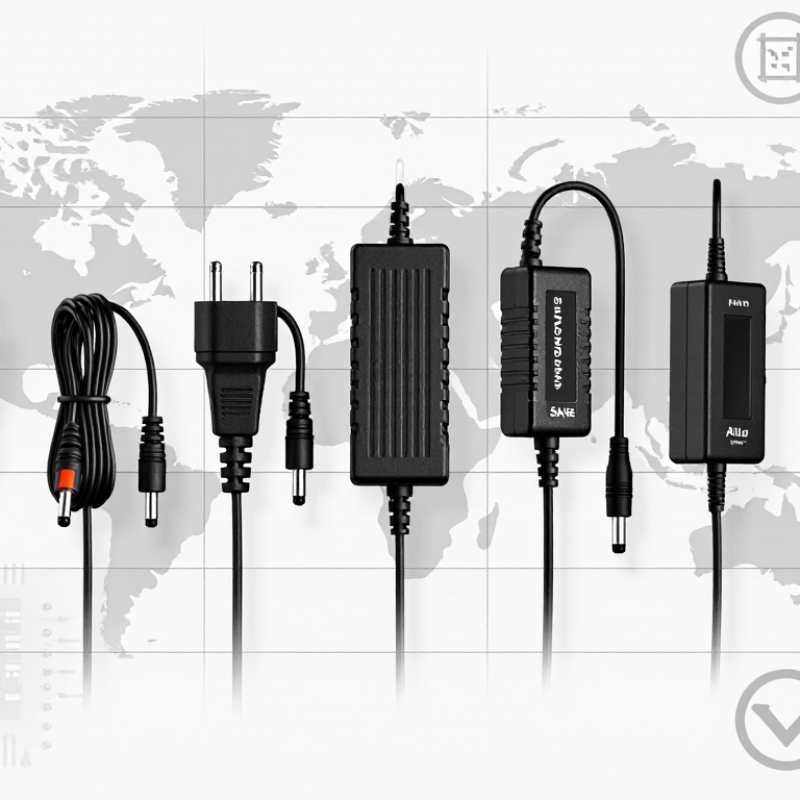
AC-to-DC 12V 5A adapter converts household alternating current into regulated 12-volt direct current. That output can power compatible routers, small monitors, LED lighting, and other electronics. The 5-amp rating describes the maximum current available, not an amount forced into the device. A device drawing 2 amps can use a suitable 5-amp adapter.
The power ceiling is 60 watts. Inside the adapter, conversion and regulation circuitry helps keep voltage steady as household power changes. A stable output matters: too much voltage can damage electronics, while too little may cause resets, flickering, or weak performance. Check the device label before connecting anything. Look for 12V DC, its required current, and the polarity symbol.
The plug must fit correctly. A barrel connector can look right yet have a different diameter, and center-positive polarity is common but not universal. Check both details. For travel, inspect the adapter’s input label; “100–240V AC” indicates broad mains compatibility, but plug shape still varies by region. Heat is worth noticing, too. Warm operation may be normal, but a hot casing, buzzing, or an unstable connection deserves investigation. I would not guess from appearance alone; labels and measurements are more dependable.
A 12V, 5A adapter can supply up to 60 watts, but check that your device needs 12V DC and draws no more than 5A. The voltage should match; the current rating may be equal to or higher than the device’s requirement. Check the label. A higher current capacity does not force extra current into a compatible device.
Compare input range and frequency when buying for different regions. Many adapters accept 100–240V AC, but verify the printed specifications rather than assuming. The output should be regulated, with stated voltage tolerance and ripple where available. These details matter for sensitive electronics. A basic listing may omit them, which makes comparisons less certain.
Connector size and polarity are easy to overlook. Confirm the plug’s outer and inner diameters, cable length, and positive or negative center before ordering. Polarity matters. Look for overcurrent, overvoltage, short-circuit, and thermal protection, plus safety certifications relevant to the intended market. Also check the rated operating temperature if the adapter will sit in a warm cabinet. No single specification tells the whole story; packaging and product listings can leave out useful test conditions.
For global buyers, a 12V, 5A adapter must match both the destination’s mains supply and the device’s requirements. Its maximum rated output is 60 watts. Check the input label for a range such as 100–240V AC and 50/60Hz before ordering; never assume every model supports worldwide voltage. A plug-shape adapter changes the fit, not the electrical input.
Small details matter. Confirm the DC connector’s outer and inner dimensions, polarity, and required output current against the device label or manual. A 12V supply rated for at least 5A may suit a device drawing 5A, but the connector and polarity must also match. Check the label. A loose barrel plug can interrupt power, even when the voltage looks right.
Certification needs vary by destination and product category. Ask for documentation tied to the exact adapter model, and check that its markings and test records are suitable for the intended market. Packaging claims alone are not enough. Even careful buyers can overlook a regional plug variant or a certification mismatch; I would verify both before placing a large order. A little extra checking saves trouble later.
Global voltage compatibility snapshot by market
Values show commonly specified nominal mains voltages and are a regional reference, not a product ranking. For broad compatibility, check that an adapter’s input label covers 100–240V AC at 50/60Hz, its output is 12V DC at 5A (60W), and its plug and required local safety approvals suit the destination. Actual supply conditions can vary.
A 12V 5A adapter delivers up to 60 watts, but buyers rarely need the same design. A compact wall-plug model suits crowded power strips. A desktop brick keeps heavier circuitry off the outlet. A wide-input model can accept different mains voltages, while a travel-plug version helps buyers match regional sockets. These features are not interchangeable. Check the input range and plug type before ordering.
Cable and connector details create four more useful choices. A long DC lead can reach a shelf-mounted device; a short lead reduces clutter on a desk. A right-angle barrel plug fits tight spaces. A locking connector helps prevent accidental unplugging in equipment that supports it. A screw-terminal version can simplify fixed installations, but only when the device is designed for that connection. Small details matter.
Two further profiles are a regulated, low-ripple model for sensitive electronics and a robust enclosed model for frequent handling. These are buyer needs, not universal guarantees: confirm the device’s required voltage, current, polarity, connector dimensions, and polarity symbol. A common mistake is choosing by amperage alone. The supply should provide 12V and at least the required current, while the connector must fit correctly. Check before ordering. I would still verify destination-market safety markings and operating conditions, since listings can be unclear and one overlooked specification can mean a return.
| No. | Adapter Profile | AC Input | DC Output | DC Connector | AC Plug / Cord Option | Typical Buyer Need | Compatibility Check |
|---|---|---|---|---|---|---|---|
| 1 | Compact fixed-plug adapter | 100–240 V AC, 50/60 Hz | 12 V DC, up to 5 A (60 W maximum) | 5.5 × 2.1 mm barrel, center-positive option | Regional interchangeable wall plugs | Small electronics installations where minimizing cable clutter matters | Confirm the device’s required barrel size, polarity, and current before use. |
| 2 | Desktop adapter with detachable mains cord | 100–240 V AC, 50/60 Hz | 12 V DC, up to 5 A (60 W maximum) | 5.5 × 2.1 mm barrel, center-positive option | Detachable cord supplied with the correct regional wall plug | Desk equipment and installations where the AC cord may need replacement | Check the cord inlet type and ensure the supplied mains cord is rated for the local supply. |
| 3 | Adapter with 5.5 × 2.5 mm barrel | 100–240 V AC, 50/60 Hz | 12 V DC, up to 5 A (60 W maximum) | 5.5 × 2.5 mm barrel, center-positive option | Regional wall-plug version | Devices whose input socket specifically requires a 2.5 mm inner barrel contact | A 5.5 × 2.1 mm plug may not make a reliable connection in a 2.5 mm socket; verify the device specification. |
| 4 | Adapter with locking DC connector | 100–240 V AC, 50/60 Hz | 12 V DC, up to 5 A (60 W maximum) | Locking connector, supplied to match the equipment | Detachable regional mains cord | Equipment that needs additional resistance to accidental DC plug disconnection | Locking connectors vary by design; confirm the exact connector family, pinout, and polarity. |
| 5 | Adapter with terminal-block output lead | 100–240 V AC, 50/60 Hz | 12 V DC, up to 5 A (60 W maximum) | Two-wire lead for a compatible screw-terminal connection | Regional wall-plug or detachable-cord version | Control panels and low-voltage devices designed for wired DC input | Observe the marked positive and negative terminals; this is not a substitute for a compatible connector. |
| 6 | Longer DC lead configuration | 100–240 V AC, 50/60 Hz | 12 V DC, up to 5 A (60 W maximum) | Barrel connector selected to match the device | Regional wall-plug version | Setups where the powered device sits farther from the mains outlet | Longer or thinner DC leads can increase voltage drop; verify cable length and wire gauge for the load. |
| 7 | Low-profile wall adapter | 100–240 V AC, 50/60 Hz | 12 V DC, up to 5 A (60 W maximum) | 5.5 × 2.1 mm barrel, center-positive option | Low-profile regional plug where available | Installations with limited space around the wall outlet | Check outlet spacing, plug orientation, and whether the adapter body blocks adjacent sockets. |
| 8 | Adapter with replaceable regional AC cord | 100–240 V AC, 50/60 Hz | 12 V DC, up to 5 A (60 W maximum) | Barrel connector selected to match the device | Detachable cord with a locally compatible wall plug | Buyers distributing equipment across multiple mains-plug regions | Use a cord and adapter combination rated for the destination country and the adapter’s specified input. |
| 9 | Wide-input desktop adapter | 90–264 V AC, 47–63 Hz, when specified by the manufacturer | 12 V DC, up to 5 A (60 W maximum) | Barrel connector selected to match the device | Detachable regional mains cord | Buyers who need a wider stated input range for varied supply conditions | Confirm the exact input range on the product label; input ratings differ between models. |
| 10 | Enclosed adapter with replaceable DC lead | 100–240 V AC, 50/60 Hz | 12 V DC, up to 5 A (60 W maximum) | Replaceable lead or connector matched to the device | Regional AC plug or detachable mains cord | Buyers seeking a configuration that can be serviced with a compatible replacement lead | Confirm approved lead types and connection polarity; do not assume different leads are interchangeable. |
Selection note: These are comparison profiles, not claims about specific branded products. A 12 V, 5 A rating means up to 60 W of output; the connected device must accept 12 V DC, and its connector dimensions, polarity, and current requirement must match. Check the adapter label and destination-market safety requirements before purchase.
A 12V 5A adapter supplies 12 volts of direct current and can provide up to 5 amps. Check your device’s label or manual for its required voltage and current. The voltage must match; the adapter’s current rating may equal or exceed the device’s needs. A device rated at 12V and 3A can generally use a suitable 12V, 5A adapter. That does not mean it will draw all 5 amps.
Check the connector carefully. Barrel plugs can look identical while differing in diameter or polarity. Compare the device’s polarity symbol with the adapter label, and confirm the plug fits snugly without force. Also check that the adapter accepts the AC input used where you plan to operate it. Small details matter. One easy-to-miss point is heat: keep the adapter uncovered and away from bedding or other soft surfaces. A loose plug or unusual warmth deserves attention, not guesswork.
Tips: Before connecting, verify voltage, polarity, plug dimensions, and current rating. If any label is unclear, consult the device maker or a qualified technician rather than testing a random adapter. A little uncertainty is worth taking seriously.
It can provide up to 60 watts. Check your device label to confirm it needs 12V DC and no more than 5A.
Usually, yes. The adapter can offer more current than required, but its voltage must match the device. Check the label.
Match the plug’s outer and inner diameters, polarity, and cable length. A loose barrel plug can interrupt power. Fit matters.
Check its input label for the destination’s mains voltage and frequency, such as 100–240V AC and 50/60Hz. A plug-shape adapter only changes the fit.
Look for overcurrent, overvoltage, short-circuit, and thermal protection. Verify markings and test documents for the exact model and destination market. Packaging claims alone may not tell the whole story.
A compact wall-plug model can save space. A desktop brick keeps heavier circuitry away from the outlet. I would still measure the available space.
A long lead can reach a shelf, while a short one reduces desk clutter. Right-angle plugs help in tight spaces. Locking connectors only work with compatible equipment.
Check stated voltage tolerance, ripple, and operating temperature. Regulated, low-ripple models may suit sensitive devices, but listings sometimes omit useful test details. I might miss something, so I would verify the specifications.
This guide explains what an Ac Dc 12v 5a Power Adapter does and how to compare options for different devices and buyer needs. It highlights key specifications, including output voltage and current, connector type, polarity, efficiency, and protective features. It also considers the practical differences among adapter designs, helping readers understand which features may matter for home, office, or travel use.
For international buyers, the guide outlines how to check input-voltage range, plug compatibility, and relevant safety certifications before choosing an adapter. It presents ten types of 12V 5A adapters suited to varied requirements, without treating one option as right for everyone. The final section offers a straightforward way to match an adapter to a device: confirm the device’s required voltage, ensure the adapter can supply sufficient current, and verify that the connector and polarity are compatible.

Tech Adapter